

:quality(70))
01
First of all: When should you take your pet to the vet?
Persistent, intense scratching should always be investigated. Not because it automatically means something serious – but because the appropriate course of action depends on the cause, and this cannot be reliably determined without an examination.
Go straight to the vet if:
the dog is scratching or biting itself until it bleeds
open wounds, scabs or bald patches appear
the itching is sudden and severe
swelling, redness or a feeling of heat are present
the dog shows no improvement despite treatment
02
The most common causes – and how to tell them apart
1. Parasites: the classic first suspicion
Fleas, mites, autumn grass mites – parasites are the most likely explanation for sudden, severe itching, particularly if it occurs seasonally or is concentrated in specific areas of the body. Fleas often leave black specks in the coat (flea droppings), whereas mites are not visible to the naked eye. Important: Even if no parasites are visible, this does not rule out an infestation. Sarcoptes mites, in particular, are microscopic and cause severe itching – even without visible skin changes. Is your pet’s parasite protection up to date? This is the first thing to check – and is surprisingly often overlooked.
2. Food intolerances and environmental reactions
If there is no parasite infestation and the scratching is chronic or recurrent, it is worth taking a closer look at possible food intolerances. A distinction is made between reactions to food ingredients – often specific proteins such as beef, chicken or wheat, frequently combined with digestive problems – and reactions to environmental factors such as pollen, house dust mites or mould, which may be seasonal or persistent, and tend to affect the paws, belly, ears and face. Identifying the cause is a complex process and should be left to a vet. Food intolerances are diagnosed via a structured elimination test – no spontaneous changes to the diet, as these can skew the results.
3. Dry skin and a compromised skin barrier
Dry air, bathing too frequently with unsuitable shampoo, nutrient deficiencies or genetically more sensitive skin – all of these can impair the skin’s natural protective function. If the skin’s lipid barrier is compromised, it loses moisture more quickly and becomes more susceptible to irritation. Signs to look out for: dandruff, cracked or flaky skin, a dull coat, scratching without any apparent external trigger.
What can help: According to several controlled studies, omega-3 fatty acids – particularly EPA and DHA from salmon oil – help support the epidermal lipid barrier and maintain normal skin function. A randomised double-blind study (Thieme Veterinary Medicine, 2021) showed a gradual improvement in skin and coat quality after 12 weeks in dogs with impaired skin function. The effect is real – but it takes time. Four to eight weeks of consistent administration before a difference becomes visible.
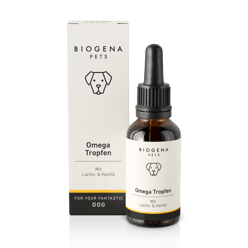
Omega Drops
4. Nutrient deficiency: when the body isn’t getting enough from within
The skin is a dog’s largest organ – and also the last to be supplied when nutrients are in short supply. The body prioritises the internal organs. The coat and skin get whatever is left over.
Biotin (vitamin B7) is directly involved, biochemically, in fatty acid synthesis – that is, in the production of the lipids that hold the skin barrier together. Biotin also supports the production of keratin, the structural protein of the coat, skin and claws. Zinc, in the form of zinc glycine chelate, supports normal cell division and the maintenance of the skin barrier – and is better absorbed in this bioavailable chelated form than inorganic variants. MSM provides organic sulphur for keratin formation. Hyaluronic acid supports the skin’s hydration from within. In combination, these nutrients – as demonstrated by a review of veterinary nutrition (Eisenschenk, Vet Clin Small Anim, 2024) – have the strongest effect on maintaining normal skin functions.
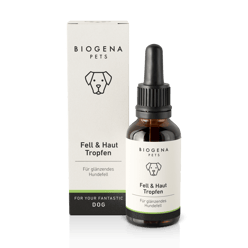
Fur & Skin Drops
5. Stress: the underestimated trigger
Dogs may scratch, bite and lick themselves excessively due to stress or a lack of exercise – even without any physical cause. A particularly common symptom is paw licking as a stress response, often accompanied by hair loss or changes in eating behaviour. The reason lies in the connection between the nervous system and the skin – the gut, immune system and skin communicate with one another via physiological pathways, and prolonged tension can affect the skin’s barrier function.
Valerian, magnesium, L-tryptophan and B vitamins are well-established nutrients that support normal nervous system function and internal balance – particularly in challenging situations such as travelling, moving house or changes in daily routine. If all physical causes have been ruled out and scratching increases during periods of stress, it is worth looking into these options.
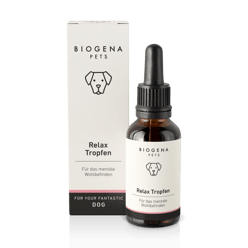
Relax Drops
03
What you can do
Identify the cause – before you take action
Rule out parasites. Assess the diet. Assess everyday stress levels.
Consistency and time
Micronutrients need to be taken regularly for four to eight weeks before any improvement in coat quality becomes visible. The skin renews itself in cycles. If you give up after two weeks, you haven’t given your body a fair chance.
Don’t forget external factors
Avoid bathing your dog too often to protect its natural oil layer. Use a mild dog shampoo. Use a humidifier to counteract the dry air caused by heating in winter. Keep an eye on contact with potential triggers.
04
Conclusion
Constant scratching almost always has an underlying cause – once the cause is identified, targeted nutritional support can be provided where it is most needed: omega-3 for the skin barrier, biotin and zinc for normal skin renewal, and valerian and magnesium to maintain inner balance during stressful periods.
:quality(70))
:quality(70))
:quality(70))
:quality(70))
:quality(70))
:quality(70))
:quality(70))
:quality(70))
:quality(70))