

:quality(70))
01
Typical symptoms: How can I recognise dry skin on my dog?
It is not always immediately obvious, but some symptoms may indicate dry skin:
Increased itching – your dog scratches or licks itself more often
Dandruff – particularly visible on dark coats
Dull, lacklustre coat
Skin redness or small dry patches
Increased hair loss
02
Causes: What could be behind dry skin on dogs?
Dry skin is usually a sign that something is out of balance. The most common causes include:
Dry heated air in winter: this also dehydrates dogs
Cold and wet weather: can damage the natural skin barrier
Lack of essential fatty acids: e.g. omega 3, which plays a role in skin and coat health
Intolerances or poor nutrition: e.g. a lack of micronutrients such as zinc, biotin or vitamin E, or a protein deficiency.
Too frequent or inappropriate bathing: disrupts the protective sebum layer of the skin
Stress: can weaken your dog's immune system, making the skin more susceptible to dryness, irritation and infection. Frequent scratching or licking when stressed further exacerbates dry skin.
Hormonal imbalance
Parasites or skin diseases such as dermatitis or seborrhoea
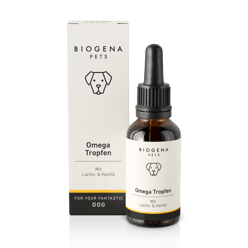
Omega Drops
03
Tips: What soothes my dog's skin?
Depending on the cause, there are various ways to support your dog's skin – both externally and internally.
Home remedies
A tried and tested home remedy is pure coconut oil. It can be gently massaged into dry areas of skin. Coconut oil leaves a light protective film that binds moisture and can soothe the skin. Important: Use sparingly and make sure you use good quality oil. Another home remedy is apple cider vinegar: Diluted with water, apple cider vinegar can help stabilise the skin's pH value and relieve itching. Simply spray it carefully onto the affected areas to alleviate the symptoms.
04
Dog supplements for dry skin
Nutrition is particularly important for healthy skin. Certain nutrients can provide support from within:
Omega-3 fatty acids (e.g. from salmon oil) – support the natural skin barrier and can counteract dry, flaky skin
Zinc – plays a role in skin regeneration and maintaining healthy skin functions
Biotin – contributes to the maintenance of normal skin and a strong, shiny coat
Vitamin E – helps protect skin cells from oxidative stress
Hyaluronic acid – is known for its high water-binding capacity and can help moisturise the skin from within
MSM (methylsulfonylmethane) – provides organic sulphur, which is involved in the formation of skin, coat and connective tissue
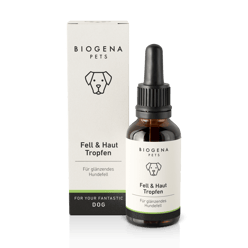
Fur & Skin Drops
05
My dog has dandruff – what can I do?
When the skin becomes unbalanced, this often manifests itself in visible dandruff. With a few targeted steps, you can provide your dog with noticeable relief – and gently support its skin health:
Regular brushing
Gentle brushing with a soft brush removes loose dandruff, promotes blood circulation in the skin and can support natural hair growth. At the same time, you strengthen your bond – coat care is quality time.
Humidity for indoor air
Dry heating air can further irritate the skin. A humidifier ensures a pleasant indoor climate and can help to relieve feelings of tightness or itching.
Use home remedies with caution
Apple cider vinegar is traditionally used for skin care – diluted and applied externally, it is said to help remove dead skin cells. But be careful: only use it on intact skin and, if in doubt, seek professional advice.
Check with your vet to determine the causes
If the dandruff persists or other symptoms appear, it is advisable to have your pet checked by a vet. This will help you find out whether the cause is an allergy, parasites or a skin condition, for example.
06
Conclusion
Dry skin in dogs is not a cause for concern – but it is a sign to take a closer look. With the right skin care and targeted support, you can make a big difference. At BIOGENA PETS, we are here to help you with our in-depth knowledge and high-quality products – so that your four-legged friend can feel completely comfortable in their own skin again. BEST FRIENDS DESERVE THE BEST.
:quality(70))
:quality(70))
:quality(70))
:quality(70))
:quality(70))
:quality(70))
:quality(70))
:quality(70))
:quality(70))