

:quality(70))
01
Why isn’t my dog drinking enough? An overview of the most common causes
Not every dog drinks the same amount. Some dogs drink water regularly throughout the day, whilst others drink rather sparingly. The amount a dog drinks depends, amongst other things, on:
Body size and weight
Age and life stage
Activity level
Type of diet
Temperature and environment
It is therefore less important to compare your dog with others, and more important to ask: What is normal for your dog?
If their drinking behaviour changes significantly, this may be a sign that you need to take a closer look.
Medical causes: When drinking is uncomfortable or painful
Sometimes, a physical change is the reason behind reduced water intake. Pain or discomfort can cause your dog to drink less or visit their water bowl less often.
Toothache and oral health problems
Problems in the mouth can make drinking uncomfortable. Dental problems, changes to the gums or other discomfort in the mouth can cause your dog to eat or drink more cautiously. Some dogs may then avoid certain movements or display changes in behaviour when taking in food and water.
You should therefore look out for possible signs such as:
eating more slowly or more cautiously
chewing more on one side
a change in breath odour
sensitivity when the muzzle is touched
Gastrointestinal symptoms or nausea
The digestive system can also influence how much a dog likes to drink. In the event of discomfort, nausea or changes in the gastrointestinal tract, a dog’s general behaviour may change.
A balanced digestive system is important for your dog’s wellbeing. BIOGENA PETS Belly Drops support normal digestion and can help maintain the natural balance in the digestive system.
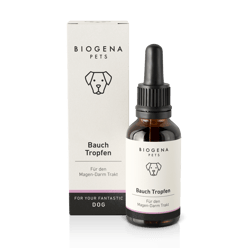
Belly Drops
Age-related causes: Why older dogs often drink less
As your dog gets older, various bodily functions change. This can also affect their drinking habits. Some senior dogs drink less because their activity levels, daily routine or physical needs adapt over the course of their lives.
Possible age-related factors include:
A change in the sensation of thirst: Older dogs sometimes perceive signals of thirst less clearly and may therefore visit their water bowl less frequently.
Less exercise: If your dog becomes calmer with age and moves around less, their daily fluid requirements may also change.
Changes in daily routine: Many senior dogs have different habits to those they had in their younger years and require more rest periods.
Age-related changes to metabolism: As dogs get older, natural processes in the body change. Consequently, your dog’s nutritional requirements may also change.
It is particularly worth keeping a close eye on water intake in older dogs. Small changes to their daily routine, an adjusted diet and age-appropriate care can help support your dog’s wellbeing during this stage of life.
BIOGENA PETS Senior Drops support age-appropriate care and can be a useful supplement for older dogs.
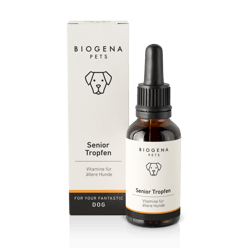
Senior Drops
Behavioural and environmental causes: When the bowl is avoided
The reason for your dog not drinking enough isn’t always down to something physically wrong with him. Changes in his environment or his daily routine can also play a part.
Dogs are creatures of habit and react to new situations with varying degrees of sensitivity. Some changes go largely unnoticed by us humans, but can be quite a big adjustment for a dog.
Stress
Stress in dogs can manifest itself in various ways. Some dogs become more restless, whilst others withdraw or change their usual behaviour – which may also include their water intake.
Triggers can include, for example, changes to their daily routine, a move, a journey, new situations or changes to their social environment. During stressful periods, your dog may pay less attention to their basic needs.
A calm environment, consistent routines and plenty of places to retreat to can help your dog regain a sense of security in their daily life.
As a complementary measure, BIOGENA PETS Relax Drops can help calm your dog when they’re stressed and support them in challenging situations.
A new bowl or an unfamiliar place to drink
Some dogs are sensitive to changes involving their water bowl. A new bowl may only look different to us – but for your dog, the smell, sound or feel of it may be unfamiliar.
Water quality
Dogs perceive their surroundings primarily through their sense of smell. That is why the quality and freshness of the water can also affect whether your dog enjoys drinking from it. Stagnant water can develop different odours or become contaminated over time.
Wet food vs. dry food
Diet has a significant impact on fluid intake. Wet food already contains a high water content, whereas dogs on dry food are more reliant on drinking additional fluid from their water bowl. If you change your dog’s diet, their drinking habits may therefore also change.
02
How much water does a dog need each day?
A dog’s water requirements vary from dog to dog and depend on a number of factors. These include body weight, activity level, diet, age and the outside temperature.
Rule of thumb based on body weight
As a rough guide: about 50 ml of water per kilogram of body weight per day.
So a dog weighing 20 kg needs approximately 1 to 2 litres of fluid a day. If your dog is fed wet food, part of this amount is already covered by their diet – you should bear this in mind when estimating their needs.
The actual requirement can also vary. An active dog after a long walk or a dog on a warm day may need more fluid.
At what point is the amount of fluid consumed considered to be too little?
A low intake of water on its own does not automatically mean that your dog is not drinking enough. The key factor is comparing this to their usual behaviour.
A dog that has always drunk very little from its bowl but gets enough fluid from its food may behave differently to a dog whose water intake suddenly drops significantly. You should keep a close eye out for any changes over several days or any other unusual symptoms.
03
Hydration in summer: Why dogs should drink plenty of water in hot weather
On hot days, the need for fluids increases. Unlike humans, dogs cannot sweat through their skin; instead, they regulate their body temperature mainly by panting. In the process, their bodies lose fluid, which must then be replenished.
Particularly on hot days, factors such as longer walks, active exercise, high outdoor temperatures or direct sunlight can affect their fluid requirements.
Adequate water intake is therefore an important part of looking after your dog in summer temperatures.
Recognising the signs of dehydration and heatstroke
Dehydration can manifest itself through the following symptoms, amongst others:
dry mucous membranes
reduced activity
unusual tiredness
increased panting
Heatstroke is a serious condition and can manifest itself, for example, through severe exhaustion, disorientation or circulatory problems. In such cases, veterinary assistance should be sought immediately.
04
7 tips to help your dog drink more
If your dog isn’t drinking much, even small changes to their daily routine can help make drinking water more appealing. It’s not about forcing your dog to drink, but about offering them options that are as straightforward and pleasant as possible.
First, observe your dog’s drinking habits: does he prefer to drink in the morning or in the evening? Does he favour certain places? Or has his behaviour only recently changed? These observations will help you find the right support for your four-legged friend.
Tip 1: Place several water bowls around the house
Dogs often drink whilst going about their business – especially when water is easily accessible. Having just one bowl in a fixed spot may mean your dog passes it less often or doesn’t use it in certain situations.
Having several drinking spots around the home can therefore be helpful. Particularly in larger flats or houses, those with several floors, or if your dog spends a lot of time in different areas, an extra water bowl can make access easier. An easily accessible drinking spot can also be useful for older dogs, when walking long distances or getting up frequently becomes increasingly difficult.
Tip 2: Top up with fresh water every day
Fresh water is one of the most important elements of a good drinking routine. Water that has been left in the bowl for a long time can develop an off-putting odour or become contaminated by dust, hair and food scraps. By changing the water regularly, you create a pleasant drinking environment for your dog.
Make sure to:
sufficient clean water in the bowl
regular cleaning of the bowl
that the drinking bowl is in good condition
Especially on warm days, the water should be checked more frequently, as its quality and temperature can change more quickly.
Tip 3: Use wet food or broth
Feeding can play an important role in your dog’s daily fluid intake. wet food already contains water and can therefore meet part of their fluid requirements. If, on the other hand, your dog is mainly fed dry food, they will consume less fluid through their food and will be more reliant on drinking extra water.
Adding a little water to their food can also be a way of incorporating more fluid into their daily routine.
A small amount of suitable stock can also be a way of making water more appealing to the palate. Make sure you only use varieties suitable for dogs, without unsuitable additives such as onions or garlic.
Tip 4: Add a touch of flavour to the water
Some dogs are more likely to drink water if it has a familiar taste. One option is to occasionally make the water a little more appealing by adding suitable ingredients. However, you should ensure that you only use additives that are safe for dogs.
For example, strongly spiced foods or ingredients that may be harmful to dogs are not suitable.
If your dog consistently drinks very little, you should continue to monitor the cause. Flavouring the water can be a helpful everyday measure, but it is no substitute for seeking a veterinary assessment if there are noticeable changes.
Tip 5: Check the material and location of the bowl
The right spot and a suitable bowl can make all the difference. Some dogs have clear preferences when it comes to where they drink.
Various factors can play a part in this:
Material: Some dogs prefer certain materials, such as ceramic or stainless steel.
Size: The bowl should be suited to your dog’s size and offer enough space.
Location: A quiet spot away from the hustle and bustle can be more pleasant for drinking.
If your dog suddenly starts drinking less, it’s worth checking whether anything has changed around the bowl. Perhaps it’s now in a spot with more distractions or noise.
Tip 6: Use a drinking fountain instead of a bowl
Some dogs are particularly interested in moving water. A drinking fountain can be a way of making drinking more interesting. The flowing water may be more appealing to some dogs, as it differs from stagnant water in a bowl. Furthermore, many dogs have a keen sense of smell and are very attuned to changes in their surroundings.
However, a drinking fountain isn’t necessary for every dog. Some dogs still prefer a traditional water bowl. The key is to find out which option your dog prefers. Make sure you clean drinking fountains regularly too, so that the water stays fresh.
Tip 7: Provide extra water points in the shade when it’s hot
It is particularly important that water is available at all times, especially during walks, exercise or time spent outdoors.
Additional water stations can help ensure your dog has access to fresh water even when you’re out and about.
Pay particular attention to the following:
a shaded spot
fresh water that hasn’t been standing for too long
sufficient quantities of water
a way for your dog to drink whilst out and about
Especially in summer, being well prepared can help ensure that your dog can easily meet its natural needs, even in higher temperatures.
05
When you should take your pet to the vet
If your dog happens to be drinking less than usual, this doesn’t necessarily mean there’s cause for concern.
What matters most is how things develop over a longer period of time: If your dog consistently drinks less than usual or if other changes occur, you should take a closer look.
Your dog cannot tell you directly what’s wrong. That’s why it helps to be mindful of changes in behaviour, feeding habits and water intake.
Warning signs that may indicate an illness
It is advisable to have your dog examined by a vet if they are drinking significantly less and are also showing other unusual symptoms.
Pay particular attention to:
a sudden change in the amount they drink for no apparent reason
additional changes in their eating habits
unusual tiredness or reduced activity
vomiting or diarrhoea
signs of pain or discomfort
changes in urine output
a general change in your dog’s behaviour
Even if your dog is drinking significantly more than usual, it may be worth having the cause investigated.
It is particularly advisable to discuss any changes with your vet at an early stage, especially in the case of puppies, older dogs or animals with known health issues.
How to measure and record your dog’s water intake correctly
If you feel that your dog isn’t drinking enough, it may be helpful to monitor their actual water intake over a few days.
Here’s how to do it:
Measure the amount of water: In the morning, pour a known amount of water into the bowl and make a note of the amount.
Check the remaining amount: At the end of the day, measure how much water is left.
Make a note of any special circumstances: Note down whether there were any particular factors that day – for example, plenty of exercise, warm weather, stress or a change in diet.
Observe over several days: Individual days can vary. A longer period will give a better indication of whether drinking behaviour has actually changed.
Also take into account the fluid your dog consumes through its food. Keeping such a record can also be helpful when speaking to your vet, as it allows for a better assessment of the situation.
06
Conclusion
If your dog isn’t drinking enough, there are many possible reasons for this. Drinking behaviour is influenced by various factors – including age, diet, activity levels, environment and individual habits.
The most important step is therefore to get to know your dog well: What is their normal water intake? When do they particularly like to drink? And has their behaviour suddenly changed?
With simple adjustments to their daily routine, you can help your dog stay properly hydrated:
provide fresh water at all times
ensure a comfortable drinking environment
take feeding times into account when assessing water intake
be mindful of any changes
It’s particularly worth taking a closer look with older dogs or if you notice any noticeable changes. Paying close attention will help you recognise your four-legged friend’s needs at an early stage and support them in the best possible way.
After all, good health also means noticing the small changes in everyday life – so that your dog can remain active, balanced and full of zest for life.
:quality(70))
:quality(70))
:quality(70))
:quality(70))
:quality(70))
:quality(70))
:quality(70))
:quality(70))
:quality(70))