

:quality(70))
01
Why antibiotics disrupt the gut flora
It's estimated that trillions of microorganisms – bacteria, fungi and single-celled organisms – live in your dog’s gut, maintaining a delicate balance that scientists now refer to as the microbiome. This ecosystem is anything but passive:
It aids digestion and nutrient absorption
It produces vitamins that the dog cannot produce itself
It trains and regulates the immune system
It keeps pathogens at bay – simply by leaving them no room
When antibiotics decimate bacteria, gaps can form. Undesirable germs can occupy the vacated niches. The broader the spectrum of the antibiotic, the more profound this disruption – and the longer it takes for the gut to recover.
How long does recovery take?
Without active support, it can take weeks or even months for the microbiome to fully recover. With targeted measures, this process can be significantly accelerated. And that is precisely the point.
02
How to tell if the gut flora is out of balance
The signs aren’t always dramatic – sometimes it’s simply the feeling that your dog isn’t quite himself at the moment. The following may indicate an imbalance in the microbiome:
Loose stools or diarrhoea
Bloating and rumbling in the tummy
Loss of appetite or fluctuations in appetite
Lethargy and less energy than usual
Dull coat or skin irritations – the gut and skin are more closely linked than you might think
Increased susceptibility to infection in the weeks following treatment
Important: If symptoms such as persistent diarrhoea or vomiting persist or worsen, this should be referred to a vet!
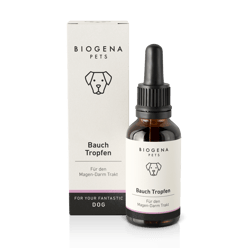
Belly Drops
03
Rebuilding gut flora after taking antibiotics – step by step
Step 1: Prebiotics – food for the good bacteria
When the gut flora is weakened, the remaining beneficial bacteria need one thing above all else: the right conditions to recover and multiply. This is exactly where prebiotics come into play.
Prebiotics are not bacteria – they are food for bacteria. More specifically: indigestible fibres that are selectively fermented by beneficial bacterial strains and promote their growth. Instead of colonising the gut from the outside, you strengthen what is still there – from the inside out.
Prebiotics vs. probiotics – the difference that matters
Probiotics are live bacterial cultures that are introduced from outside the body. Prebiotics provide the nutritional basis for these and the bacteria already present – they create the foundation on which a healthy microbiome can develop from within.
Particularly well researched for dogs: fructo-oligosaccharides (FOS). These natural carbohydrate chains are considered selective food for bifidobacteria and lactobacilli – precisely those strains that suffer most after antibiotic treatment. FOS are not digested in the small intestine and reach the large intestine unchanged, where they are needed.
Step 2: Make targeted use of proven plant-based substances
In addition to prebiotics, there are plant-based substances that gently support the gastrointestinal tract during the recovery phase:
Milk thistle – supports the liver, which plays a key role in breaking down medication and producing bile
Chamomile – can have a soothing effect on the intestinal lining; one of the oldest remedies for the stomach
Fennel & caraway – can help relax the intestinal muscles and aid in the elimination of excess gas
Liquorice root – can help soothe the intestinal lining
Step 3: A light diet during the transition phase
In the first few days after treatment, the gut benefits from easily digestible food. No experiments, no new types of food, no sudden changes. The following have proven effective:
Cooked chicken (skinless, unseasoned) – an easily digestible source of protein that does not put strain on the gut
Cooked white rice – absorbs fluid, providing a gentle base for the gut
Cooked carrots – provide soluble fibre as natural food for gut bacteria
Pumpkin (cooked or puréed) – gentle, with a prebiotic effect, and enjoyed by most dogs
During this phase, avoid high-fat foods and raw foods that are difficult to digest. If you intend to cook for your dog for longer than a few days, the diet must be professionally calculated and supplemented. Consult your vet for advice.
Step 4: Choosing the right time – sooner than you think
Many pet owners wait until the end of the course of antibiotics before giving gut support. This is understandable – but not ideal. The current recommendation is to start during the course of treatment, leaving at least a two-hour gap between this and the medication, so that the active ingredients do not interfere with one another.
The reasoning behind this is clear: if antibiotics put the gut flora under pressure, early support has more scope than support that only begins after the course has finished.
Step 5: Reduce stress
The gut and the brain communicate directly with each other via what is known as the gut-brain axis – this is not a metaphor, but a matter of physiology. A dog that is already feeling unsettled following an illness therefore needs support in this area too: routines, quiet walks, and closeness. The gut will thank you for it.
04
How long should you support the gut after taking antibiotics?
For at least as long as the course of antibiotics lasted – preferably twice as long. So, for a one-week course, this means significantly longer. It can take many weeks for the microbiome to fully recover.
Dogs that are prone to digestive problems or are older may benefit from incorporating prebiotics and plant-based substances into their daily diet on a long-term basis.
Belly Drops
05
Conclusion
Antibiotics are unavoidable sometimes – and sometimes life-saving. With prebiotics, the right plant-based ingredients and a gentle diet for a short period, you can actively help your dog’s microbiome recover from external influences – more quickly, more thoroughly and with longer-lasting results.
Start early. Keep at it. And give your dog the time he needs.
:quality(70))
:quality(70))
:quality(70))