

:quality(70))
01
What equipment do you need for hiking with a dog?
Having the right equipment will help ensure your dog feels comfortable on the go and that you can both enjoy your walk in a relaxed manner. Whilst exactly which items are essential depends on the weather, the terrain and the length of the walk, there are a few things that belong on every packing list:
A dog harness instead of a collar
For hikes, a well-fitting dog harness is usually better than a collar. It distributes the pull more evenly across the body and can therefore relieve pressure on the neck – especially when your dog is walking on a lead or on uneven ground.
Make sure that the harness:
fits perfectly and doesn’t chafe,
allows sufficient freedom of movement,
is sturdily made and
is easy to put on and take off.
Before going on longer walks, it’s worth testing the harness in everyday use. This way, you can ensure that your dog can move freely and that no pressure points develop.
Short or long leash
The right leash ensures that you are safe whilst out and about and that your dog can still move as freely as possible. Which type is best depends on the walking route, local regulations and your dog’s behaviour.
Short leash: A classic short leash is particularly suitable for walks on narrow paths, in the mountains or in areas with lots of other walkers. It gives you good control and helps you guide your dog safely in situations where visibility is poor. A leash length of around 1.5 to 2 metres is a practical choice for many walks.
Long leash: A long leash gives your dog more freedom of movement and is particularly suitable for wide paths or open countryside, provided there is no compulsory leash requirement and the terrain is clear. This allows your dog to explore its surroundings whilst you retain control. Make sure the long leash does not drag across rocky ground or dense undergrowth to prevent it from getting snagged.
Retractable leash: A retractable leash is not usually the ideal choice for walks. On uneven paths or in areas with dense vegetation, the leash can get caught more easily. Furthermore, in unexpected situations, it is often harder to control your dog quickly and safely than with a standard leash or a long leash.
Keep the leash requirement in mind
Before every hike, check the regulations in force. In many nature reserves, and during the breeding and nesting seasons, dogs must be kept on a leash. This is to protect wildlife and helps to avoid conflicts with other visitors.
Water bottle & foldable bowl for dogs
Your dog’s fluid requirements increase significantly, particularly on warm days or during longer walks. You should therefore always take enough drinking water for your dog with you. Special water bottles for dogs or a normal water bottle combined with a foldable bowl are handy. This way, your dog can drink comfortably whilst out and about.
Offer small amounts of water regularly, rather than waiting until your dog seems clearly thirsty.
Food & snacks for when you’re out and about
For short hikes, a normal meal before or after the tour is usually sufficient. If the hike lasts several hours or is a particularly challenging route, small snacks along the way may be a good idea.
Easily digestible treats that are simple to carry are ideal. They can serve as a reward and help to keep your dog motivated.
It’s best to give larger meals only after the walk , so that your dog isn’t put under unnecessary strain whilst on the move.
Poop bags
Respect for nature and fellow walkers is an essential part of any hike. That’s why poo bags should, of course, be part of your basic kit.
As a general rule: pack at least 2 to 3 poo bags for short hikes. For longer day trips or if you’ll be out and about for several hours, it’s advisable to carry 4 to 6 bags. That way, you’ll be prepared for any unexpected situations.
Clear up after your dog and then dispose of the filled bags in the nearest suitable bin. This way, you’ll help keep the footpaths clean and protect the natural environment.
Dog tag & GPS tracker (optional)
A dog tag with up-to-date contact details makes it easier to reunite a lost dog with its owner. Anyone who frequently walks in open countryside or the mountains can also use a GPS tracker. This makes it possible to locate the dog more quickly in an emergency.
However, a GPS tracker is no substitute for supervision or for keeping the dog securely on a lead or in a harness.
02
Useful additional equipment depending on the tour and the weather
Depending on the season, the weather and the route, additional equipment can improve your dog’s comfort and safety. Not every walk requires the same kit – the key is to tailor your equipment to the planned hike.
Dog backpack
On longer walks, fit, fully-grown dogs can carry a dog backpack specially designed for this purpose. You can store items such as water, a foldable bowl or snacks in it.
It is important that the rucksack fits well and that the weight is distributed evenly. As a guideline, a healthy, fully-grown dog should only carry a small proportion of its body weight. Puppies, older dogs or dogs with health issues should not carry a dog backpack.
Rain coat
For dogs with short fur, little undercoat or older dogs, it can be a good idea in cool weather and during prolonged rain. A well-fitting raincoat helps to keep the coat as dry as possible and also protects against the dog getting cold during longer breaks.
Cooling mat or cooling vest
If temperatures rise, you should try to go for a walk during the cooler hours of the morning or evening. Cooling vests or cooling mats can also help to keep your dog comfortably cool in summer conditions.
Nevertheless, the following still applies: plenty of drinking water, regular breaks in the shade and careful route planning are the most important precautions on hot days.
Dog blanket or sleeping mat
During longer breaks, your dog will appreciate a dry and comfortable place to lie down. A lightweight dog blanket or a foldable sleeping mat protects against cold, damp or stony ground and ensures your dog can relax from time to time.
LED collar or safety light
Anyone out and about early in the morning, at dawn or in poor light conditions will benefit from extra visibility. An LED collar or a small safety light on the harness can help ensure your dog is more easily spotted – by other walkers as well as cyclists.
03
Safety when hiking with dogs
Good preparation helps ensure you can enjoy your hike in a relaxed manner. Nevertheless, minor injuries, ticks or challenging sections of the trail may occur along the way. With the right safety equipment, you’ll be prepared for many situations.
First-aid kit: A first-aid kit or a small travel first-aid kit is a must on every hike – not just for you, but for your dog too. Minor injuries to the paws or superficial grazes can often be treated straight away with these. A well-stocked kit may include, amongst other things, sterile compresses, elastic bandages, wound disinfectant and a pair of scissors.
Tick tweezers or a tick hook: When hiking through woods, meadows or tall grass, there is an increased risk of ticks. You should therefore check your dog thoroughly after every walk – particularly on the head, neck, armpits, between the toes and in the groin area. If you spot a tick, you should remove it as soon as possible using tick tweezers or a tick hook. Keep an eye on the affected area for a few days afterwards and seek veterinary advice if you notice anything unusual or are unsure.
Paw protection and dog shoes: Not every surface is suitable for a dog’s sensitive paws. Sharp-edged stones, scree, hot tarmac or, in winter, ice and road salt can put a lot of strain on the paw pads. Depending on the walk, dog shoes or suitable paw protection may be advisable. Check your dog’s paws regularly during and after the walk for minor injuries, cracks or foreign objects.
High-visibility vest in poor visibility: In fog, rain or when walking at dusk, a high-visibility vest ensures your dog is more visible. Particularly in areas where footpaths and forest tracks cross, or where cyclists are out and about, a striking warning colour can increase visibility. Make sure the high-visibility vest fits well and does not restrict your dog’s freedom of movement.
04
How do you prepare a dog for longer hikes?
A successful hike begins even before you actually set off. Just like us humans, dogs also benefit from being gradually accustomed to longer distances and different types of terrain.
Build up condition slowly
Start with shorter walks or easy hikes and gradually increase the distance and elevation gain. This will allow your dog to get used to the physical exertion and build up their muscles and stamina gradually.
Always take your dog’s individual fitness level into account. Age, breed, health and previous activity levels all play an important role in planning your walks.
Drinking plenty of water
Sufficient fluid intake is important on every hike. Your dog’s water requirements increase significantly, particularly on warm days or during longer walks. You should therefore always take enough drinking water for your dog and offer him small amounts regularly – even if he isn’t yet showing any obvious signs of thirst. As a rough guide, it is advisable to take a drinking break roughly every 30 to 45 minutes. In high temperatures or during intense physical activity, shorter intervals may be advisable.
Planning breaks properly
Regular breaks are an essential part of any hike. They give your dog the chance to rest, drink some water and explore their surroundings at their own pace.
How often you should take a break depends on the route, the terrain, the temperature and your dog’s fitness level. As a guide, short rest breaks every 60 to 90 minutes or so are a good idea. On hot days or during challenging walks, more frequent breaks are recommended.
Take the opportunity to briefly check your dog’s paws and watch out for signs of exhaustion. If your dog seems unusually tired, is walking more slowly or frequently wants to lie down, it’s a good idea to adjust the route or, if necessary, cut the walk short.
Supporting the joints of active dogs
When hiking, joints, tendons and muscles are put under greater strain than during an ordinary walk. Particularly active dogs, larger breeds or older dogs can benefit from a targeted supply of selected nutrients.
Nutrients such as glucosamine and chondroitin play a role in normal joint function and can help to support the joints during physical activity.
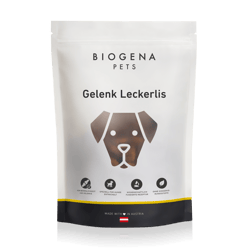
The BIOGENA PETS Joint Drops and BIOGENA PETS Joint Treats contain carefully selected ingredients to support the joints and can be easily incorporated into everyday life – both as a daily supplement and during periods of increased activity.
A balanced diet, regular exercise and a healthy body weight form the basis for dogs that love to be active.

Vitamins for active dogs
Anyone who regularly goes for walks with their dog or enjoys lots of outdoor adventures together should also ensure their dog receives an adequate supply of essential vitamins. These play numerous roles in the metabolism and contribute to various bodily functions. A balanced diet is always the foundation for this.
The BIOGENA PETS Multivitamin Drops provide selected vitamins in liquid form and can usefully supplement the daily intake of important micronutrients. They can be easily added to food and are suitable for dogs of all ages.

05
Equipment for walking your dog: a complete packing list at a glance
With this checklist, you’ll be well prepared for most tours.
Basic equipment
A well-fitting dog harness
Leash or long leash
Drinking water
Water bottle and foldable bowl
Food or treats
Poop bags
Dog tag with up-to-date contact details
Depending on the tour and the weather
Dog backpack (for fit, fully-grown dogs)
Raincoat
Cooling vest or cooling mat
Dog blanket or sleeping mat
LED collar or safety light
GPS tracker
For more safety
First-aid kit
Tick tweezers or tick hook
Paw protection or dog boots
High-visibility vest for poor visibility
:quality(70))