

:quality(70))
01
Causes of dull fur
A common cause of dull fur is an unbalanced diet – if important nutrients are missing, the fur quickly suffers. The natural change of coat can also temporarily lead to less shine. Don't forget that hormonal changes after neutering or skin conditions can also alter the appearance of the coat. And then there are uninvited guests such as fleas and ticks, which can affect the skin and coat. But the good news is that there is a lot you can do to restore your dog's coat to its former glory.
02
Nutrition & home remedies
There are some tasty and natural foods that you can easily incorporate into your four-legged friend's diet to give their coat a new shine.
Oily fish
Fish is one of the most valuable sources of animal protein – and also provides plenty of omega-3 fatty acids. These polyunsaturated fatty acids can help to moisturise the skin and support hair growth. Fish such as salmon and mackerel are particularly high in these healthy fats, making them ideal for a well-groomed appearance and a visibly shiny coat.
Zinc sources from meat
Liver is one of the most nutritious ingredients in dog food – a real powerhouse that provides your four-legged friend with important micronutrients such as natural vitamin A and zinc. These play a key role in skin health and can support hair growth. High-quality meat sources such as beef, lamb and poultry also provide valuable zinc, a trace element that helps maintain a strong, shiny coat.
Vegetables: carrots, sweet potatoes, courgettes & pumpkin
Carrots and sweet potatoes not only add colour to your pet's bowl, but also provide valuable nutrients: they contain beta-carotene, a precursor of vitamin A, which plays a role in skin health and can support a natural shine to the coat. They also contain fibre, which contributes to digestive health.
Zucchini and pumpkin are also packed with goodness: they provide your four-legged friend with vitamin C and zinc – two micronutrients that support normal skin function and help maintain a shiny coat.
Eggs
Eggs are packed with high-quality protein and biotin, a B vitamin that promotes a shiny coat and strong hair roots. Your dog will love them! Fresh and raw, they are a healthy snack – provided they are of good quality. But eggs are also great when cooked: heating kills any germs and preserves the nutrients.
By the way: Eggshells are also a valuable source of minerals for your dog. If you crush them well, you can easily mix them into their food. But as with everything, less is more! Don't give your dog more than 1–2 eggs per week to keep their meals balanced and ensure a healthy diet.
Coconut oil, olive oil, linseed oil & black cumin oil
High-quality oils such as coconut, olive, linseed and black cumin oil can naturally contribute to your dog's skin and coat care – both internally and externally.
Coconut oil helps with dry skin and dandruff and leaves the coat looking soft and well-groomed. Olive oil provides unsaturated fatty acids and can therefore promote skin moisture and coat shine. Linseed oil provides valuable omega-3 fatty acids that support skin health. And black cumin oil is valued for its anti-inflammatory properties – helpful for sensitive skin.
Whether applied directly or mixed into food, these natural oils can be a useful addition to daily coat care.
Oat flakes, linseed and chia seeds
Oat flakes are gentle on the skin and promote an even coat structure.
Linseed and chia seeds provide omega-3 fatty acids and antioxidants – for well-groomed skin and a shiny coat. Even small amounts in your pet's food can have a positive effect on their daily well-being.
03
Fur care from within: nutritional supplements for coat and skin
Just like us humans, it is not always easy for dogs to get all the important nutrients they need from their daily diet. Targeted dietary supplements can be a useful addition here – easy to use and tailored to the needs of your four-legged friend.
High-quality supplements help to provide targeted care for skin and coat – especially during periods of increased demand, such as when your pet is shedding or has sensitive skin. Biotin and zinc play an important role in skin renewal and contribute to a healthy coat structure. Hyaluronic acid supports the moisture balance of the skin, while MSM (organic sulphur) can provide additional nourishment for the connective tissue.
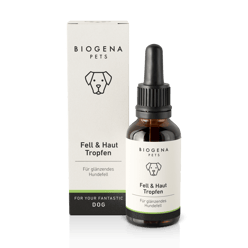
Fur & Skin Drops
04
Outer coat care
Combing and brushing
Regular brushing is especially important during the coat change: it removes loose hair, prevents matting and stimulates blood circulation – a plus for healthy skin and a well-groomed coat. During this phase, you can brush your dog more often, ideally once or twice a day.
Be sure to use a gentle touch so that brushing remains pleasant for your dog. A brush with different lengths of bristles is recommended, especially for long-haired dogs, as it reaches the undercoat and helps to remove knots early on.
Home remedy: apple cider vinegar
Apple cider vinegar is a tried and tested home remedy that can naturally support your dog's skin. Its pH value is similar to that of dog skin at around 5, which can help maintain the natural skin barrier and gently cleanse the skin.
When diluted (approx. 3 tablespoons to 1 litre of water), apple cider vinegar can be easily used as a spray – ideally every other day. It can help to care for the coat and makes brushing easier. Don't worry: the smell dissipates quickly as it dries. If your dog is particularly sensitive, you can reduce the amount of vinegar slightly.
A dull coat often looks as if it needs a thorough wash. However, bathing your dog too often can do more harm than good: it removes moisture and washes away the natural oils that keep the coat healthy and shiny. That means: Only bathe your dog as often as is really necessary – and be sure to use mild care products specially developed for dogs that do not dry out the skin.
Conclusion
A healthy, shiny coat starts with a balanced diet that provides all the essential nutrients. Regular grooming, sufficient exercise and a parasite-free environment also play an important role. In addition, targeted dietary supplements can help support the skin and coat from within.
If your dog's coat remains dull despite all measures, it is advisable to consult a vet to determine the cause – because sometimes there is more to it than meets the eye.
:quality(70))